
Have you ever wondered what blogging will look like in the next few years? Will AI write every blog? Will human bloggers still be needed? These are some of the biggest questions many bloggers are asking today.
The future of AI in blogging is exciting, but it is changing faster than ever before. AI can help you find blog ideas, write first drafts, improve SEO, create images, and save hours of work. But does that mean AI can create a successful blog on its own? Not really. The most successful blogs still need human creativity, real experience, and original ideas.
At UseAiLearn, we believe AI is your smart assistant—not your replacement. When you use AI blogging tools in the right way, you can create better content, grow your website faster, and give more value to your readers. The secret is knowing when to use AI and when to use your own knowledge.
In this complete guide, you will discover how AI is changing blogging, the biggest benefits and challenges, the best AI tools for bloggers, Google’s view on AI-generated content, and practical tips to stay ahead in 2026 and beyond. If you want to build a successful blog using AI without losing your unique voice, this guide is for you.
What Is AI Blogging?
AI blogging means using Artificial Intelligence (AI) to help create, improve, and manage blog content. AI is not a human writer. It is a smart tool that helps bloggers work faster and more easily.
Many bloggers use AI tools to save time and generate better ideas. However, the final blog should always be checked and improved by a human. This makes the content more useful, accurate, and trustworthy.
What Does AI Blogging Mean?
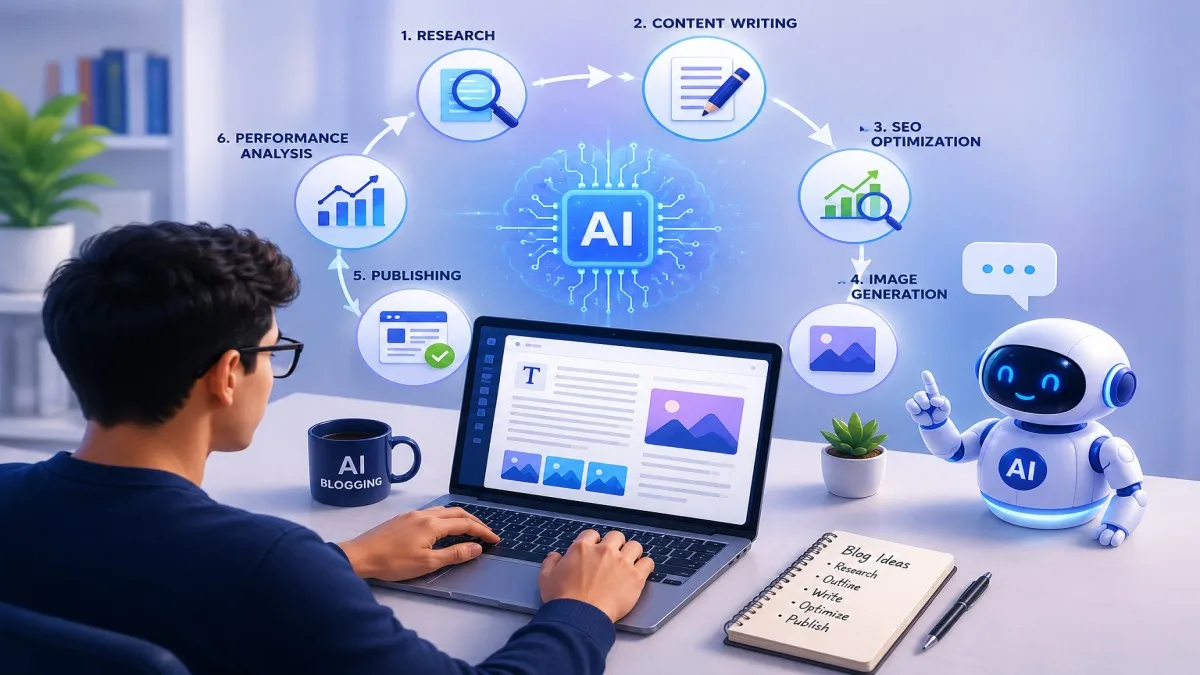
AI blogging is the process of using AI tools during different parts of blogging. You can use AI before writing, while writing, and even after publishing your blog.
For example, AI can:
- Suggest blog topic ideas.
- Create a content outline.
- Write a first draft.
- Improve grammar and spelling.
- Suggest SEO keywords.
- Write a meta description.
- Create AI images.
Example:
Suppose you want to write a blog on “Best AI Tools for Students.“ Instead of spending hours thinking about ideas, you can ask an AI tool to create an outline. Then, you can write the article in your own words and add your own experience.
How Does AI Help Bloggers?

AI makes many blogging tasks easier. It helps bloggers spend less time on repetitive work and more time creating valuable content.
AI can help you:
- Find trending blog topics.
- Research information quickly.
- Write a simple first draft.
- Improve grammar and readability.
- Optimize content for SEO.
- Create images and social media captions.
Example:
Imagine you finish writing a blog post. AI can check grammar mistakes, suggest a better title, create an SEO-friendly meta description, and recommend keywords. This saves time while helping you publish a better article.
Popular AI Blogging Tools
Today, many AI tools help bloggers create high-quality content.
Some popular AI blogging tools are:
- ChatGPT – Writing and brainstorming ideas.
- Google Gemini – Research and content creation.
- Claude – Long-form writing and editing.
- Grammarly – Grammar and writing improvement.
- Canva AI – Creating blog images and graphics.
- Surfer SEO – SEO optimization and content improvement.
Each tool has different features. Many bloggers use two or more AI tools together to get better results.
How AI Is Changing Blogging
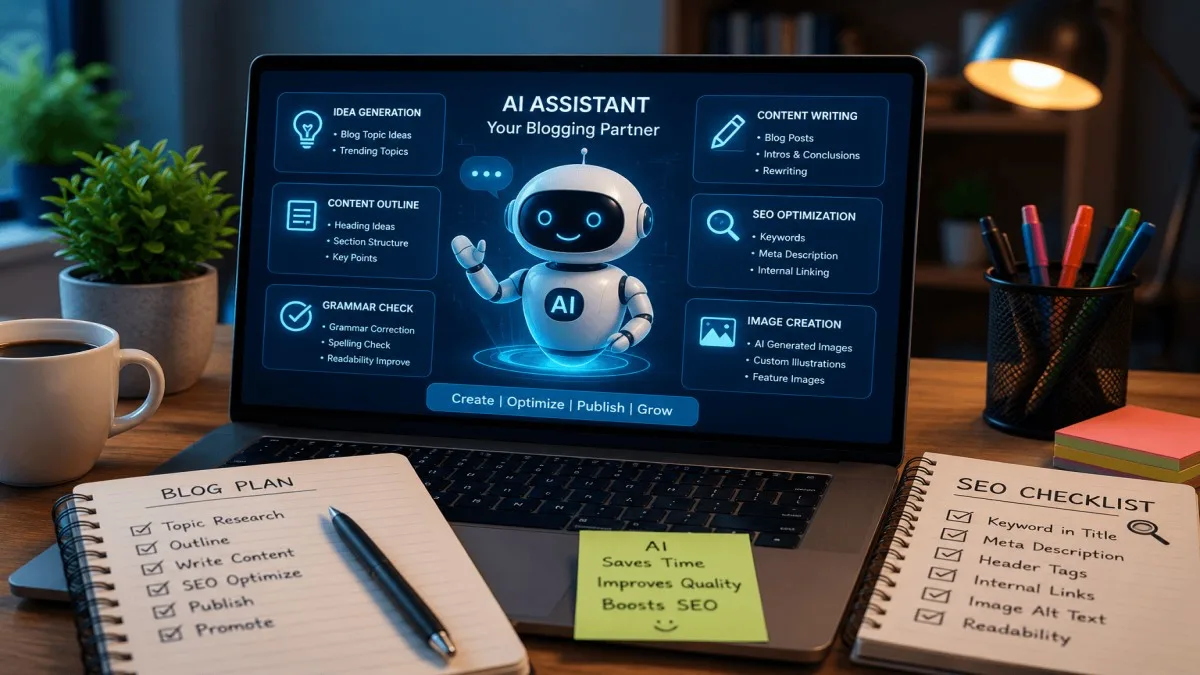
Artificial Intelligence (AI) is changing the way people create blogs. In the past, bloggers had to do everything by themselves. They spent many hours doing research, writing articles, editing, finding images, and improving SEO.
Today, AI helps bloggers complete these tasks much faster. It saves time, improves productivity, and makes blogging easier for beginners. However, AI works best when it is used with human knowledge and creativity.
Faster Content Creation
Writing a blog post from the beginning can take many hours. AI helps bloggers create outlines, write first drafts, and organize ideas in just a few minutes.
This does not mean you should publish AI-written content without checking it. You should always edit the content, add your own experience, and make sure the information is correct.
At UseAiLearn, we usually create the first outline with ChatGPT and then rewrite every section manually. This saves us nearly 50% of writing time while keeping the article original.
Example:
You want to write an article about “Best Free AI Image Generators.“ AI can create a blog outline and the first draft. Then, you can add real examples, update the information, and make the article more helpful for readers.
Better Keyword Research
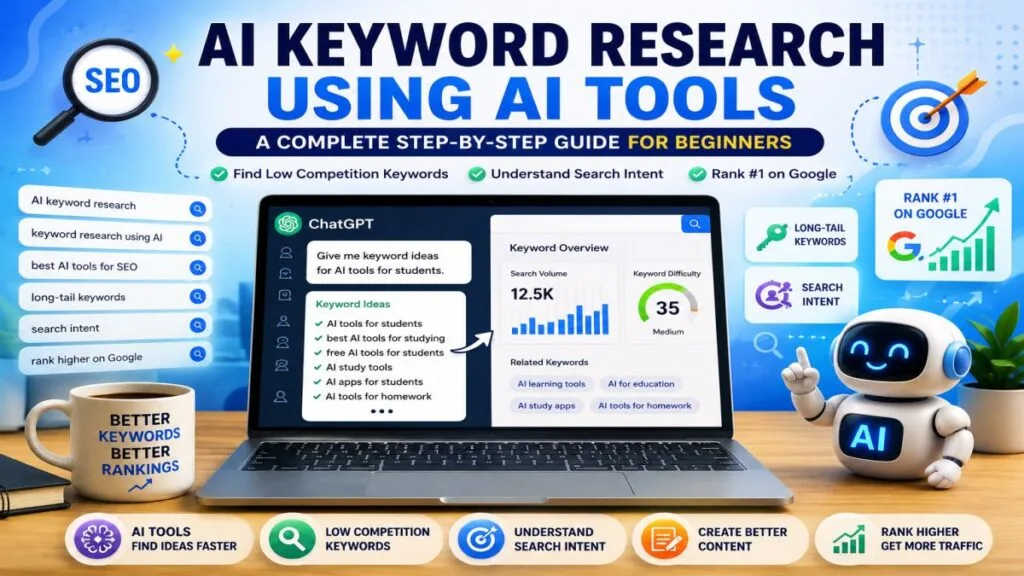
Choosing the right keywords is important for SEO. AI tools can suggest popular keywords, related search terms, and common questions that people search on Google.
This helps bloggers create content that matches what readers are looking for.
Example:
If your topic is “AI Writing Tools,” AI may also suggest keywords like:
- Best AI writing tools
- Free AI writing tools
- AI writing tools for beginners
- AI writing tools for SEO
These keywords can help your article reach more people.
Smarter SEO Optimization
AI can help improve your blog for search engines. It can suggest better titles, improve headings, check readability, and create SEO-friendly meta descriptions.
AI also helps find missing topics that should be added to make the article more complete.
Example:
After finishing your article, an AI tool may suggest:
- A better SEO title
- A shorter meta description
- More readable paragraphs
- Extra FAQs that readers often search for
These improvements can make your article more useful for both readers and search engines.
AI Image Generation
Images make blog posts more attractive. Today, AI can create custom images from a simple text prompt.
This helps bloggers save time and create unique visuals for their articles.
Example:
If your blog is about “How to Write Blog Posts Using ChatGPT,“ you can ask an AI image tool to create an illustration of a blogger working with AI. This image can make your article more engaging.
Content Personalization
Different readers have different needs. AI can help create content that matches different audiences, such as beginners, students, business owners, or professionals.
This makes the content easier to understand and more useful.
Example:
A beginner may need simple explanations, while an experienced marketer may want advanced SEO tips. AI can help organize content for both types of readers.
Benefits of AI in Blogging
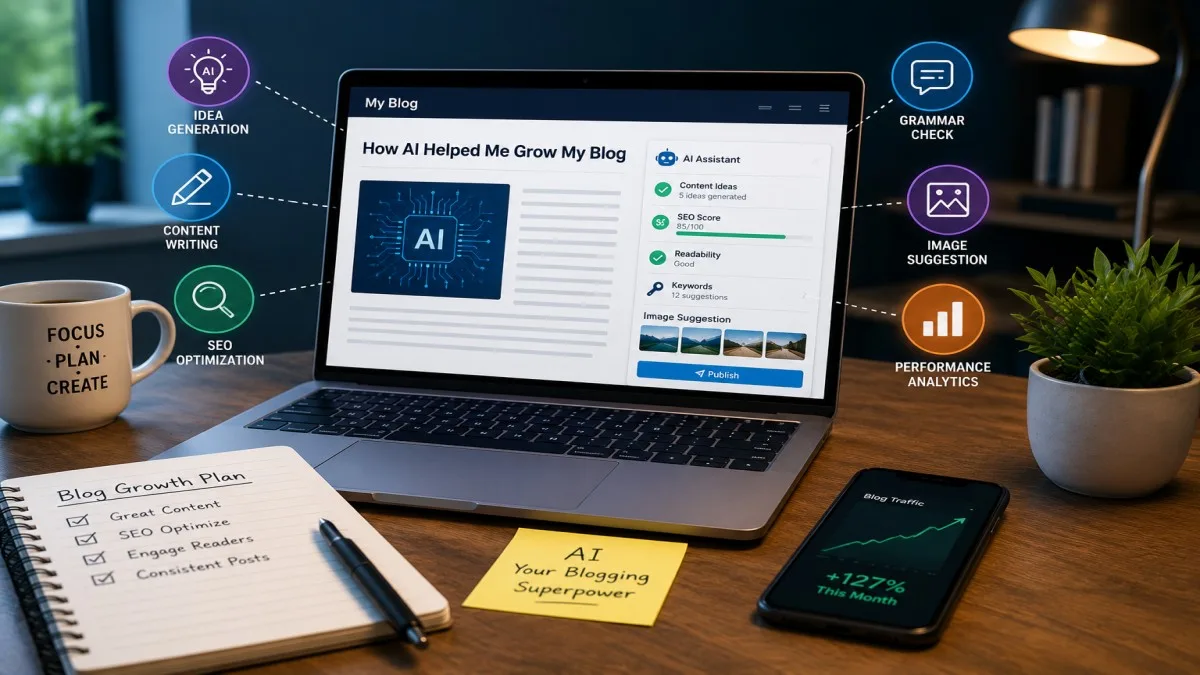
AI has become a helpful tool for bloggers. It makes many blogging tasks easier and faster. Whether you are a beginner or an experienced blogger, AI can help you save time, improve your content, and work more efficiently.
However, AI works best when you use it as a helper. Your ideas, experience, and final editing are still very important.
Saves Time
Writing a blog from the beginning takes a lot of time. You need to do research, create an outline, write the article, edit it, and optimize it for SEO.
AI can complete many of these tasks in just a few minutes. This gives you more time to improve your content and focus on your readers.
Example:
You want to write a blog about “Best AI Tools for Students.” AI can quickly create an outline and a first draft. Instead of spending three hours writing from scratch, you can spend that time adding your own examples and improving the article.
Increases Productivity
AI helps bloggers complete more work in less time. It reduces repetitive tasks such as rewriting sentences, checking grammar, creating meta descriptions, and generating blog ideas.
This allows bloggers to publish content more consistently.
Example:
A blogger who usually writes one article every week may be able to publish two or three high-quality articles with the help of AI, while still reviewing and editing each one carefully.
Helps Beginners
Many new bloggers do not know how to start writing a blog. AI can guide them by suggesting topics, creating outlines, and explaining difficult ideas in simple words.
This makes blogging less confusing for beginners.
Example:
A beginner wants to write about “AI Image Generators.” AI can suggest headings, explain technical terms, and provide a simple structure for the article.
Improves Content Planning
A good blog needs a clear plan. AI can help organize ideas, arrange headings, and suggest related topics that readers may also want to know.
This creates a more complete and useful article.
Example:
If your article is about “How to Make Money Using AI,“ AI may suggest adding sections about AI tools, SEO, challenges, and future trends so readers get complete information in one place.
Better Content Optimization
AI can improve your content before you publish it. It checks grammar, readability, SEO, headings, and keyword placement. It can also suggest FAQs and meta descriptions.
These improvements help readers understand your article more easily.
Example:
After writing your blog, AI may suggest using shorter paragraphs, adding subheadings, and answering common questions. These small changes can make your article easier to read and more helpful.
Challenges of AI Blogging
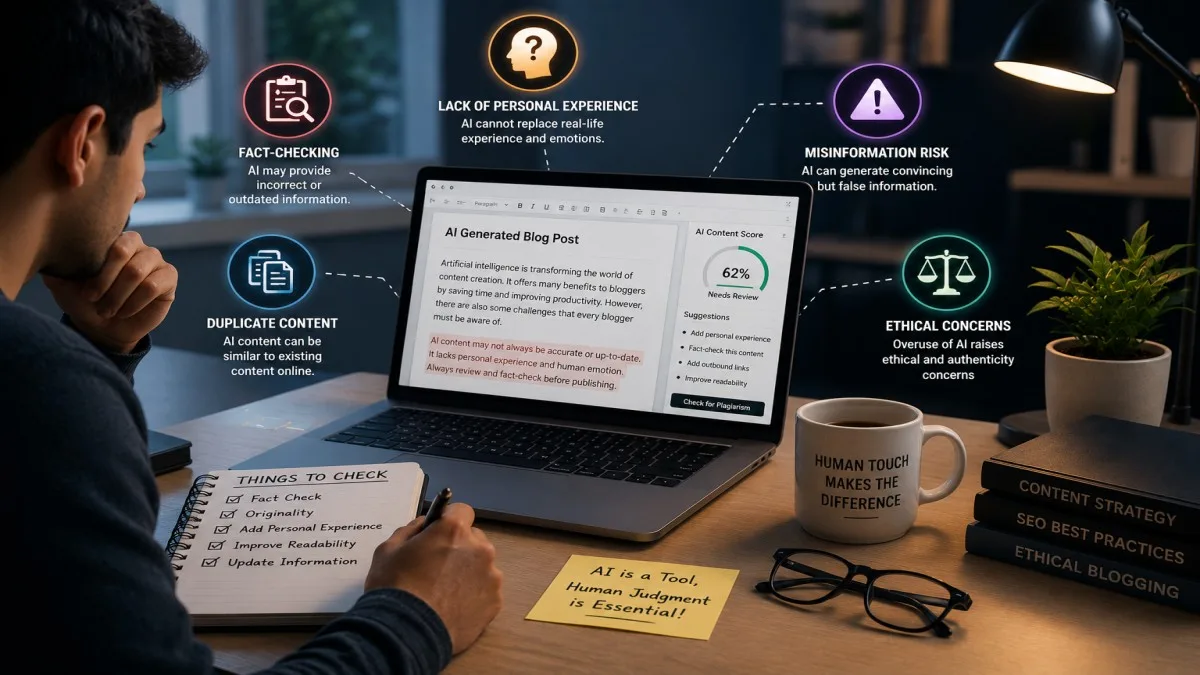
AI makes blogging easier, but it is not perfect. Sometimes AI can make mistakes or give incomplete information. If bloggers depend only on AI, the quality of their content may become weak.
The best way to use AI is to combine it with human knowledge, real experience, and careful editing. This helps create content that is useful, accurate, and trustworthy.
Fact Checking
AI can sometimes give incorrect or outdated information. It may also misunderstand a topic or provide facts without reliable sources.
Before publishing a blog, always check important facts, numbers, dates, and examples from trusted sources.
Example:
If AI says a new AI tool was launched in 2026, you should visit the tool’s official website or announcement to confirm the information before adding it to your article.
Lack of Personal Experience
AI can write good sentences, but it does not have real-life experience. It cannot share personal stories, lessons, or opinions based on real work.
Readers often trust blogs that include real examples and personal experience.
Example:
If you are reviewing an AI writing tool, your own experience after using the tool is more valuable than a general AI-generated description.
Duplicate Content Risks
AI may create content that is very similar to common information found on the internet. If many bloggers use the same prompts, their articles may look alike.
To make your blog unique, always rewrite the content, add your own ideas, and include original examples.
Example:
Instead of copying an AI draft, explain how you used the AI tool, what you liked, what problems you found, and who should use it.
Overdependence on AI
Using AI for every task can reduce your own writing and research skills. Blogging is not only about writing quickly. It is also about learning, thinking, and sharing useful knowledge.
AI should support your work, not replace your creativity.
Example:
If you let AI write every article without editing it, your content may sound repetitive and less personal. Readers usually enjoy articles that have a human touch.
Ethical Considerations
Bloggers should use AI responsibly. They should avoid plagiarism, false information, fake reviews, and misleading content.
Being honest with readers helps build trust over time.
Example:
If you recommend an AI tool, write about its real benefits and real limitations. Do not claim that a tool is perfect if you have not tested it yourself.
Will AI Replace Human Bloggers?

Many people ask, “Will AI replace human bloggers?” The simple answer is No.
AI is a powerful tool, but it cannot think, feel, or share real-life experiences like humans. It can help bloggers write faster, but it still needs human guidance. The future of blogging is not about AI replacing people. It is about humans and AI working together.
From our experience at UseAiLearn, AI works best as a writing assistant—not as a complete writer. We have tested AI-generated drafts many times and found that they often need better explanations, updated information, and a more human tone. After adding our own editing and insights, the final article becomes much more engaging and trustworthy for readers.
What AI Can Do
AI can complete many blogging tasks quickly. It can generate ideas, create outlines, write first drafts, improve grammar, suggest SEO keywords, and even create images.
These features help bloggers save time and increase productivity.
Example:
If you want to write a blog about “Best AI Tools for Students,” AI can prepare an outline, suggest keywords, and write a draft. This gives you a good starting point.
What Humans Still Do Better
Humans have creativity, emotions, opinions, and real-life experience. They understand readers better and can tell stories that connect with people.
Humans can also check facts, test AI tools, and share honest reviews based on personal experience.
Example:
If you use an AI image generator for one month, you can write about its real strengths and weaknesses. AI cannot share this kind of personal experience because it has never used the tool.
The Future of Human + AI Collaboration
The future of blogging is teamwork between humans and AI. AI can handle repetitive tasks, while humans focus on creativity, accuracy, and building trust with readers.
Bloggers who learn to use AI wisely may save time and create more valuable content.
Example:
At UseAiLearn, we tested ChatGPT, Gemini, Claude, and Microsoft Designer while creating AI tutorials. We found that ChatGPT is excellent for outlines, Gemini is useful for research, and Claude performs well for editing long articles. However, every AI-generated draft still needed human editing before publishing.
Google’s View on AI-Generated Content
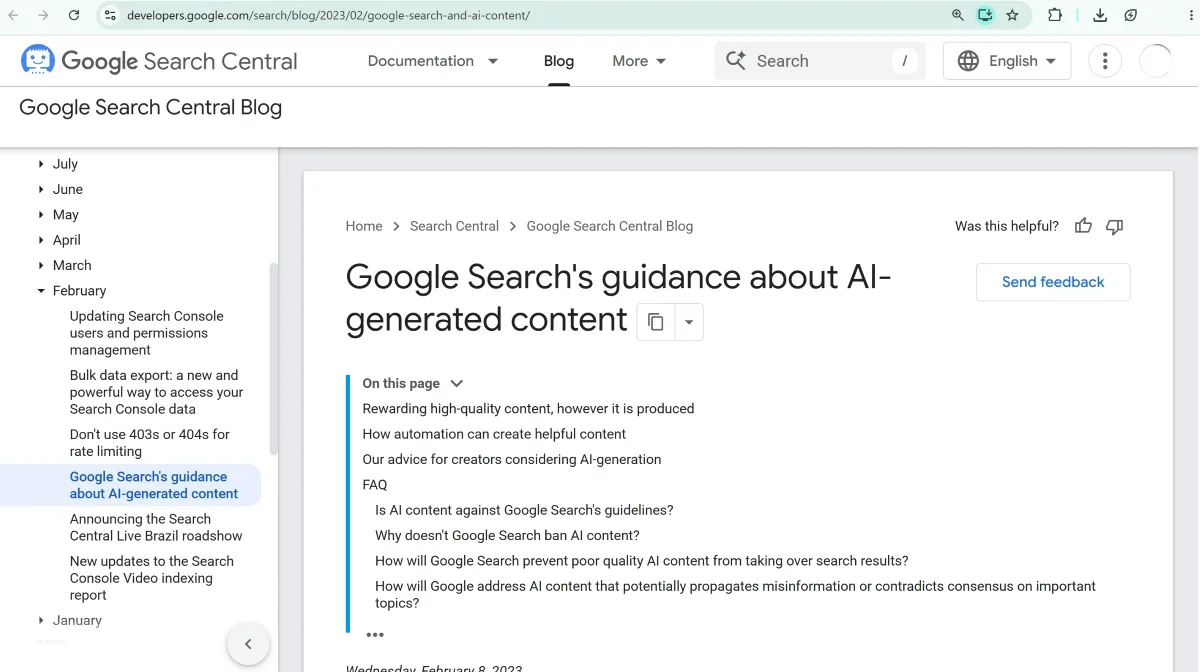
Many bloggers wonder if Google allows AI-generated content. The answer is yes, but there is one important condition. Google cares more about the quality and usefulness of the content than how it was created.
If your article is helpful, accurate, original, and written for people, it can perform well in Google Search. However, if you use AI to create low-quality or spammy content just to rank higher, it may not perform well.
Helpful Content
Google wants websites to publish content that helps real people. Your article should answer the reader’s questions and provide useful information.
Do not write content only to rank on search engines. Write it to solve a problem or teach something valuable.
Example:
A blog titled “How to Create AI Images for Free” should explain every step clearly, include real examples, and answer common questions. This is more helpful than writing short content filled with keywords.
EEAT Principles
Google values content that shows Experience, Expertise, Authoritativeness, and Trustworthiness (EEAT).
This means your content should:
- Share real experience whenever possible.
- Give correct and useful information.
- Be clear and honest.
- Build trust with readers.
You do not need to be a famous expert, but you should create content carefully and responsibly.
Example:
If you write about an AI writing tool that you have actually used, explain what you liked, what problems you found, and who should use it. Your real experience makes the article more valuable.
Best Practices for AI-Assisted Writing
AI is a helpful assistant, but it should not do all the work. Always review and improve AI-generated content before publishing.
Good blogging habits include:
- Check all facts and information.
- Rewrite the content in your own style.
- Add personal experience and examples.
- Use simple language.
- Fix grammar and spelling mistakes.
- Keep the content updated.
Example:
AI writes the first draft of your blog. Then you edit it, add screenshots, include your own tips, update the latest information, and improve the conclusion. The final article becomes much more useful for readers.
Best AI Tools for Bloggers in 2026
Today, there are many AI tools that make blogging easier. Some tools help you write articles, while others help with SEO, research, or image creation. Using the right AI tools can save time and improve the quality of your blog.
Remember, no single AI tool can do everything perfectly. Many successful bloggers use two or more AI tools together to get the best results.
Writing Tools
AI writing tools help bloggers create content faster. They can generate ideas, create outlines, write first drafts, and improve grammar.
Some popular AI writing tools are:
- ChatGPT
- Google Gemini
- Claude
- Microsoft Copilot
These tools can also help explain difficult topics in simple words.
Example:
You want to write a blog about “The Future of AI in Blogging.” You can use ChatGPT or Gemini to create an outline and a first draft. Then, you can add your own experience, examples, and latest updates before publishing.
SEO Tools
SEO tools help your blog rank better in search engines. They suggest keywords, improve headings, check readability, and optimize your content.
Some popular AI SEO tools are:
- Surfer SEO
- Semrush AI
- Ahrefs AI Features
- Rank Math Content AI
These tools help you create content that matches what people are searching for.
Example:
After writing your article, an SEO tool may suggest adding a new heading, improving keyword placement, or answering common questions. These changes can make your content more useful.
Image Generation Tools
Images make blog posts more attractive. AI image tools can create unique images from a simple text prompt. You do not need graphic design skills to use them.
Some popular AI image tools are:
- ChatGPT Image Generation
- Adobe Firefly
- Microsoft Designer
- Leonardo AI
- Ideogram
Always check the usage rights and follow the tool’s terms before using generated images on your website.
Example:
If your blog is about “AI Blogging,” you can create an image showing a blogger working with AI on a laptop. This makes your article more interesting for readers.
Research Tools
Good research helps you write accurate and useful articles. AI research tools can summarize information, explain topics, and help you find important points faster.
Some useful research tools are:
- Google AI Mode (where available)
- Perplexity AI
- ChatGPT
- Google NotebookLM
Even when using AI, always verify important facts with reliable sources.
Example:
Before writing about a new AI tool, you can use a research tool to understand its features. Then, visit the tool’s official website to confirm the latest information before publishing your article.
How to Use AI for Blogging the Right Way
AI is a helpful tool, but it should not do all the work. The best blogs are created when AI and humans work together. You can use AI to save time, but you should always add your own ideas, experience, and final editing.
If you use AI wisely, you can create content that is helpful, original, and easy to understand.
Research
Every good blog starts with proper research. Before writing, learn about your topic and understand what readers want to know. AI can help you collect ideas, explain difficult topics, and summarize information.
However, always check important facts using trusted sources.
Example:
You want to write a blog about “Best AI Tools for Bloggers.” AI can help you find popular tools and explain their features. Then, you should visit the official websites of those tools to confirm the latest information.
Outline
A clear outline keeps your article organized. AI can create headings and subheadings so you know what to write in each section.
You can also change the outline to match your writing style and your readers’ needs.
Example:
For the topic “The Future of AI in Blogging,” AI may suggest headings like:
- What Is AI Blogging?
- Benefits of AI
- Challenges
- Best AI Tools
- Future Trends
This gives you a good structure before you start writing.
First Draft
AI can create a first draft in a few minutes. This helps you overcome writer’s block and saves time.
Do not publish the draft without checking it. Rewrite sentences, improve the language, and make sure everything is correct.
Example:
AI writes the first draft of your article. You then add your own examples, update the latest information, and remove anything that sounds repetitive.
Human Editing
Human editing is one of the most important steps. AI may make mistakes or use words that sound unnatural.
Read the entire article carefully. Fix grammar, improve the flow, and add your personal experience whenever possible.
Example:
If AI says, “This tool is the best for everyone,” you can change it to, “This tool is a good choice for beginners, but advanced users may need more features.” This makes the content more accurate.
SEO Optimization
After editing, optimize your article for search engines. AI can suggest better titles, keywords, meta descriptions, and FAQs.
Use keywords naturally. Do not repeat the same keyword too many times.
Example:
Your main keyword is “The Future of AI in Blogging.” AI may suggest adding related keywords such as “AI blogging tools” or “AI content creation” naturally in different sections.
Publishing Workflow
Before publishing, review your article one last time. Check that all information is correct and the content is easy to read.
A simple publishing workflow is:
- Research the topic.
- Create an outline.
- Write the first draft with AI.
- Edit the article yourself.
- Optimize for SEO.
- Add images and internal links.
- Proofread everything.
- Publish the article.
Example:
Before clicking the publish button, check all links, images, headings, and facts. A few extra minutes of review can make your article much better.
Future Trends in AI Blogging
AI is improving every year. In the future, bloggers will have more smart tools to create better content, save time, and connect with readers. However, human creativity, real experience, and trust will still be very important.
Let’s look at some important AI blogging trends that may become more popular in 2026 and beyond.
Personalized Content
In the future, AI will help bloggers create content for different types of readers. It can adjust the writing style based on the reader’s needs.
For example, beginners may need simple explanations, while professionals may want more detailed information.
Example:
A blog about “AI SEO” can have simple tips for beginners and advanced strategies for SEO experts. AI can help organize the content for both groups.
AI Video Integration
Videos are becoming more popular every year. AI tools can now help bloggers create videos from blog posts, write video scripts, add subtitles, and create voice-overs.
This helps bloggers reach people who prefer watching videos instead of reading articles.
Example:
After publishing a blog about “The Future of AI in Blogging,” you can use an AI video tool to turn the article into a short YouTube video or social media reel.
Voice Search Optimization
Many people now use voice assistants to search online. Instead of typing, they ask questions like, “What is AI blogging?” or “Which AI tool is best for bloggers?”
In the future, bloggers will need to write content that answers these questions in a simple and natural way.
Example:
Instead of writing only “AI Blogging Guide,” you can also answer questions like “What is AI blogging?” and “How can beginners use AI for blogging?” This makes your content more useful for voice search.
AI Agents for Content Workflows
AI agents are becoming smarter. In the future, they may help bloggers manage many tasks automatically.
An AI agent may:
- Find blog ideas.
- Research information.
- Create an outline.
- Write a first draft.
- Suggest SEO improvements.
- Remind you to update old articles.
Even with these tools, bloggers should still review and improve the final content.
Example:
You tell an AI agent to create a blog about “Best AI Writing Tools.” It prepares the outline, collects useful information, and creates a draft. You then edit the article, add your experience, and publish it.
Multilingual Blogging
The internet connects people from many countries. AI is making it easier to create content in different languages.
This allows bloggers to reach a larger audience without writing every article from the beginning.
However, human review is still important because AI translations may not always sound natural.
Example:
You write a blog in English. Then AI helps translate it into Hindi, Spanish, or French. After that, you review the translation to make sure it is clear and correct.
Tips to Stay Ahead as a Blogger

Blogging is changing every year. New AI tools, SEO updates, and reader expectations continue to grow. To become a successful blogger, you should keep learning and improving your skills.
AI can make your work easier, but your ideas, experience, and honesty will always make your blog stand out.
Build Your Personal Brand
People remember bloggers who have their own style and voice. Share your knowledge, experiences, and opinions. This helps readers trust you and return to your website.
Do not try to copy other bloggers. Create content that shows your unique personality.
Example:
If you write about AI tools, share how you used the tool, what you liked, and what problems you faced. Your personal experience makes your article different from others.
Share Original Experience
Readers want real stories, not just information. If you have used an AI tool, explain what happened when you used it.
Original experience builds trust and makes your content more valuable.
Example:
Instead of only listing the features of an AI image generator, explain how you created your first AI image, how long it took, and whether the result matched your expectations.
Use AI as an Assistant, Not a Replacement
AI is a great helper, but it should not replace your thinking. Use AI for research, outlines, grammar checks, and simple tasks. Then improve the content with your own ideas.
This creates better and more trustworthy articles.
Example:
AI creates the first draft of your blog. You then add screenshots, personal tips, real examples, and the latest updates before publishing.
Keep Learning SEO
SEO changes over time. Learning basic SEO helps more people find your blog through search engines.
Understand topics like keywords, headings, internal links, meta descriptions, image optimization, and user experience.
Example:
If you write a blog about “AI Blogging,” use a clear title, proper headings, helpful images, and related keywords naturally throughout the article.
Publish Consistently
Success in blogging takes time. Publishing useful content regularly helps build trust with readers and search engines.
You do not need to publish every day. It is better to publish one high-quality article every week than many low-quality articles.
Example:
One lesson we have learned at UseAiLearn is that readers appreciate original and practical content more than perfectly written AI text. Articles that include real examples, clear explanations, and human editing usually perform better and keep visitors on the page longer. That is why we always recommend using AI to save time while letting your own knowledge and experience shape the final article.
Frequently Asked Questions (FAQ)
Below are some common questions that many beginners ask about AI blogging.
1. What is the future of AI in blogging?
The future of AI in blogging looks very promising. AI will help bloggers write faster, find better ideas, improve SEO, create images, and save time. However, human creativity and real experience will still be very important.
Example:
A blogger can use AI to create a draft in a few minutes. Then, the blogger can add personal experience and edit the article before publishing.
2. Will AI replace bloggers?
No. AI will not replace bloggers. AI is a helpful assistant, but it cannot think like a human or share real-life experiences.
The best blogs are created when bloggers use AI together with their own knowledge and creativity.
Example:
AI can suggest a blog outline, but only the blogger can share personal stories and honest opinions.
3. Is AI-generated content good for SEO?
Yes, AI-generated content can be good for SEO if it is high-quality, accurate, original, and helpful for readers.
Always review AI content, add your own ideas, and make sure the information is correct before publishing.
Example:
If AI writes a blog about SEO, check all facts, improve the language, and add real examples before publishing it.
4. Can beginners use AI for blogging?
Yes. AI is very helpful for beginners. It can explain topics, suggest blog ideas, create outlines, and write first drafts.
However, beginners should also learn blogging and SEO instead of depending only on AI.
Example:
A beginner can use AI to create a blog outline and then write the article step by step in their own words.
5. Which AI tools are best for bloggers?
Some popular AI tools for bloggers include:
- ChatGPT
- Google Gemini
- Claude
- Grammarly
- Canva AI
- Surfer SEO
Each tool has different features. Choose the tool that matches your blogging needs.
Example:
You can use ChatGPT for writing, Grammarly for grammar, Canva AI for images, and Surfer SEO for content optimization.
6. Does Google allow AI-generated content?
Yes. Google allows AI-generated content if it is useful, original, and written to help people.
Google does not reward content simply because it is written by AI or by a human. It values content that is accurate, trustworthy, and helpful.
Example:
If you use AI to write a draft and then improve it with your own experience and fact-checking, your article can provide more value to readers.
Conclusion
AI is changing blogging, but it is not replacing human bloggers. The best results come when you use AI as a helpful assistant and combine it with your own knowledge, creativity, and real experience.
At UseAiLearn, we believe that AI should help people create better content, not replace their ideas. Start with one AI tool, learn how to use it properly, and keep improving your blogging skills. Always check facts, write for your readers, and create original, helpful content. If you continue learning and publishing high-quality articles, you can build a successful blog in 2026 and beyond.
This article is based on our experience testing AI writing, SEO, and image generation tools at UseAiLearn. We tested tools like ChatGPT, Gemini, Claude, and Canva AI to understand how they help modern bloggers.