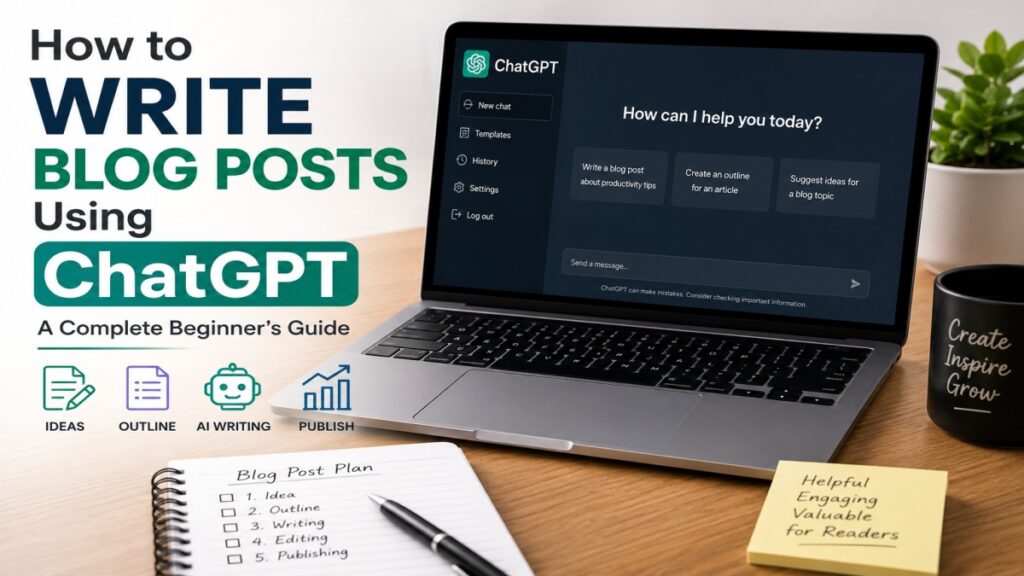
Have you ever opened a blank document and spent 20 minutes wondering what to write? I have been there too. One of the biggest reasons many beginners quit blogging is that they struggle to come up with ideas and structure their content. Fortunately, ChatGPT can make the process much easier. If you are wondering How to Write Blog Posts Using ChatGPT, you are not alone. Many beginners ask questions such as What is ChatGPT?, Can I use ChatGPT to write a blog?, What are the Benefits of Using ChatGPT for Blogging?, How to write a blog post as a beginner?, and even How to Write Blog Posts Using Free Version ChatGPT?.
The good news is that ChatGPT can make blogging much easier. Whether you are a student, content creator, freelancer, business owner, or someone starting a new website, ChatGPT can help you brainstorm ideas, create outlines, improve writing quality, and save time.
However, simply asking ChatGPT to write an article and publishing it immediately is not the best approach. To create valuable and SEO-friendly content, you need a proper process.
In this guide from UseAiLearn, you will learn exactly how to use ChatGPT to write better blog posts, avoid common mistakes, and create content that readers actually enjoy.
What Is How to Write Blog Posts Using ChatGPT?
Before learning the process, let’s understand the basics.
What is ChatGPT?
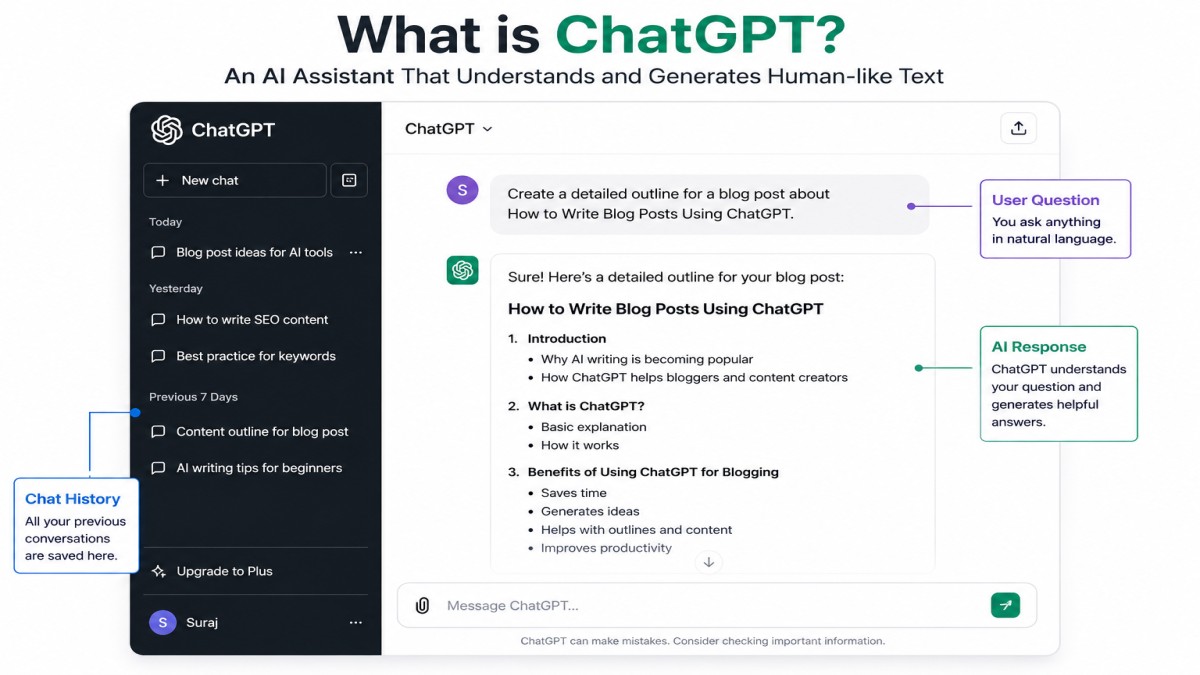
ChatGPT is an AI-powered chatbot developed by OpenAI. It can understand human language and generate text based on your instructions.
You can use ChatGPT for:
- Writing blog posts
- Creating outlines
- Generating content ideas
- Summarizing information
- Improving grammar
- Writing social media content
- Research assistance
When people search for “How to Write Blog Posts Using ChatGPT,” they want to know how to use AI as a writing assistant rather than replacing human creativity completely.
Think of ChatGPT as a smart writing partner that helps you work faster.
Why Is It Important?
If you’ve ever stared at a blank screen wondering what to write, you’re not alone. Almost every beginner blogger faces this challenge.
Many people struggle with:
- Finding blog ideas
- Creating article structures
- Writing introductions
- Maintaining consistency
- Understanding SEO
This is where ChatGPT becomes valuable.
Instead of spending hours staring at a blank screen, you can generate ideas and outlines within minutes.
For website owners, bloggers, and students, this can significantly reduce the time required to create quality content.
More importantly, ChatGPT helps beginners start writing without feeling overwhelmed.
Benefits of Using ChatGPT for Blogging
1. Faster Content Creation
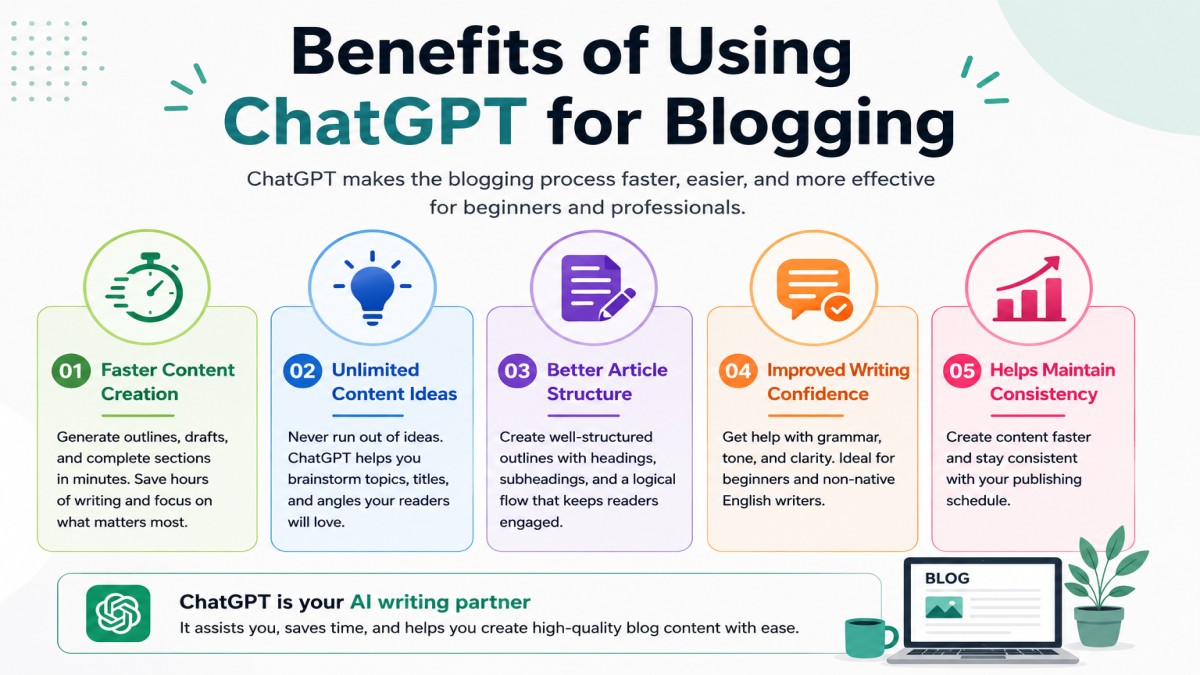
One of the biggest Benefits of Using ChatGPT for Blogging is speed.
A task that may take several hours manually can often be completed much faster with AI assistance.
2. Unlimited Content Ideas
Running out of topics is common for bloggers.
ChatGPT can generate:
- Blog topics
- Content clusters
- FAQ ideas
- Related keywords
- Headline suggestions
3. Better Article Structure
Many beginners struggle with organization.
ChatGPT can instantly create:
- H1 headings
- H2 sections
- H3 subsections
- Logical article flow
4. Improved Writing Confidence
If English is not your first language, ChatGPT can help improve readability and grammar while keeping the content easy to understand.
5. Helps Maintain Consistency
Publishing consistently is important for SEO.
ChatGPT helps create content faster, making it easier to maintain a regular publishing schedule.
For Example, When I started using ChatGPT for blog writing, I noticed that creating outlines became much faster. Instead of spending 30 minutes planning an article, I could generate a solid structure in less than 5 minutes.
Step-by-Step Guide: How to Write Blog Posts Using ChatGPT
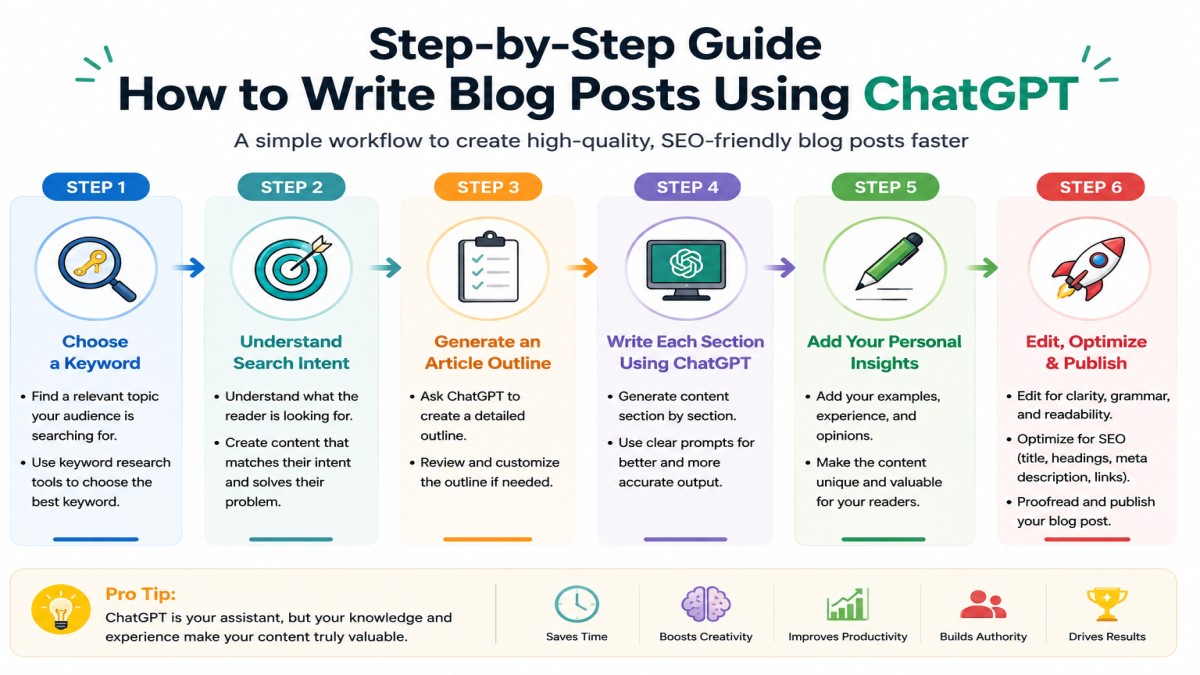
Step 1: Choose a Keyword
Every blog post should target a specific keyword.
For example:
- Best AI Tools for Students
- ChatGPT for Blogging
- AI Tools for Content Creators
Choose one primary keyword before writing.
Step 2: Understand Search Intent
Ask yourself:
Why is someone searching for this keyword?
For example:
I take the focus keywords from this article.
Keyword:
How to Write Blog Posts Using ChatGPT
User Intent:
The reader wants a practical guide.
Understanding intent helps create content that satisfies readers.
Step 3: Generate an Article Outline
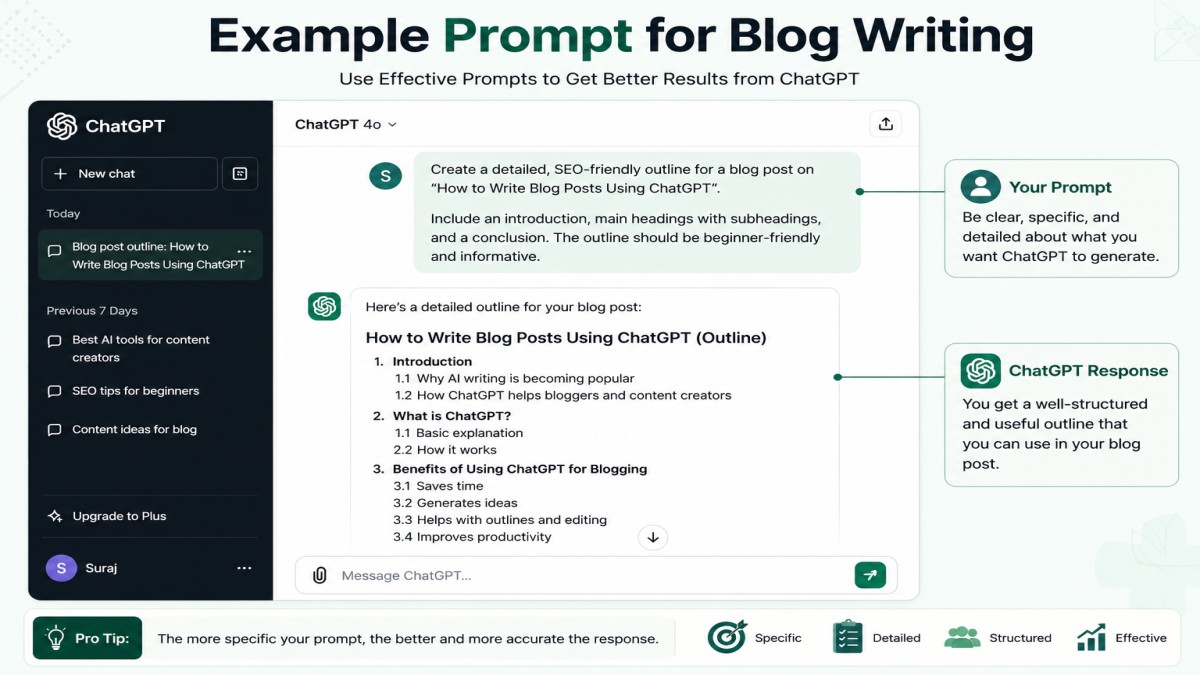
Prompt Example:
“Create a detailed SEO-friendly outline for a blog post about How to Write Blog Posts Using ChatGPT.”
ChatGPT can provide:
- Introduction
- Main sections
- FAQs
- Conclusion
This saves a lot of planning time.
Step 4: Write Each Section Separately
Avoid generating the entire article in one prompt.
Instead, generate one section at a time.
Example:
“Write a beginner-friendly section explaining the benefits of using ChatGPT for blogging.”
This usually produces higher-quality content.
Step 5: Add Personal Insights
This is where human expertise matters.
Add:
- Your experiences
- Practical examples
- Screenshots
- Tutorials
- Real use cases
These elements help build trust and improve content quality.
Step 6: Edit and Improve
Never publish AI-generated content without editing.
Check for:
- Accuracy
- Repetition
- Grammar
- Readability
- SEO optimization
The final article should feel natural and helpful.
My Recommended ChatGPT Blogging Workflow
Here is the simple workflow I personally recommend for beginners:
- Step 1: Find a keyword.
- Step 2: Ask ChatGPT to create an outline.
- Step 3: Generate content section by section.
- Step 4: Add your own examples and opinions.
- Step 5: Optimize for SEO.
- Step 6: Proofread before publishing.
Following this process helps create content that feels more natural and useful
Best Practices for Writing Blog Posts Using ChatGPT
Using ChatGPT effectively is not just about generating content. It is about creating content that is useful, trustworthy, and valuable for readers.
Use Detailed Prompts
The quality of your output depends heavily on the quality of your prompt.
Instead of writing:
“Write a blog post about AI.”
Write:
“Write a beginner-friendly blog post about the best AI tools for students. Use simple English, practical examples, and SEO-friendly headings.”
The more specific your instructions, the better the result.
Focus on Helping Readers
Always prioritize the reader’s needs.
Ask yourself:
- What problem does the reader have?
- What solution am I providing?
- What action can they take after reading this article?
Helpful content performs better in both SEO and user engagement.
Fact-Check Important Information
ChatGPT is powerful, but it can occasionally provide outdated or incorrect information.
Always verify:
- Statistics
- Product features
- Pricing information
- Technical details
This helps maintain credibility and trust.
Add Human Experience
AI can generate information, but readers trust real experiences.
Consider adding:
- Personal observations
- Lessons learned
- Screenshots
- Examples from your own projects
This makes the article more authentic.
Optimize for Readability
Readers prefer content that is easy to scan.
Use:
- Short paragraphs
- Bullet points
- Clear headings
- Simple language
Good readability improves user experience and keeps visitors on your website longer.
Pros and Cons of Using ChatGPT for Blogging
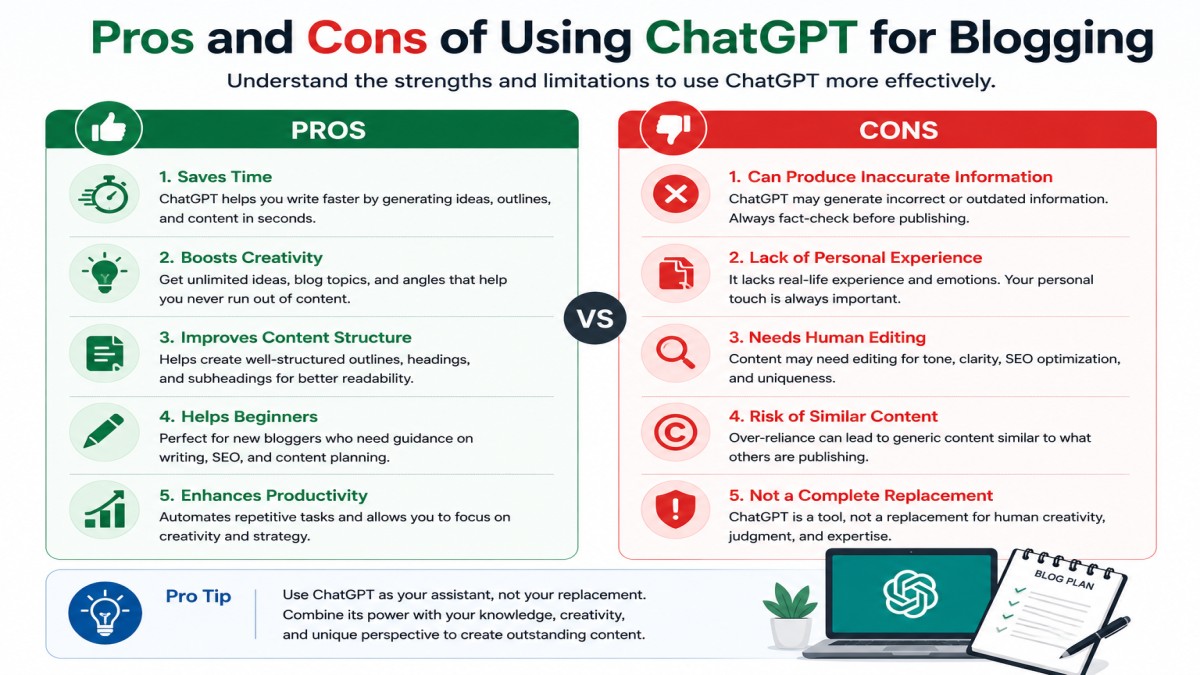
| Pros | Cons |
|---|---|
| Saves time | Can sound robotic |
| Generates ideas quickly | May contain inaccuracies |
| Helps beginners | Needs human editing |
| Improves productivity | Can be repetitive |
Common Mistakes to Avoid
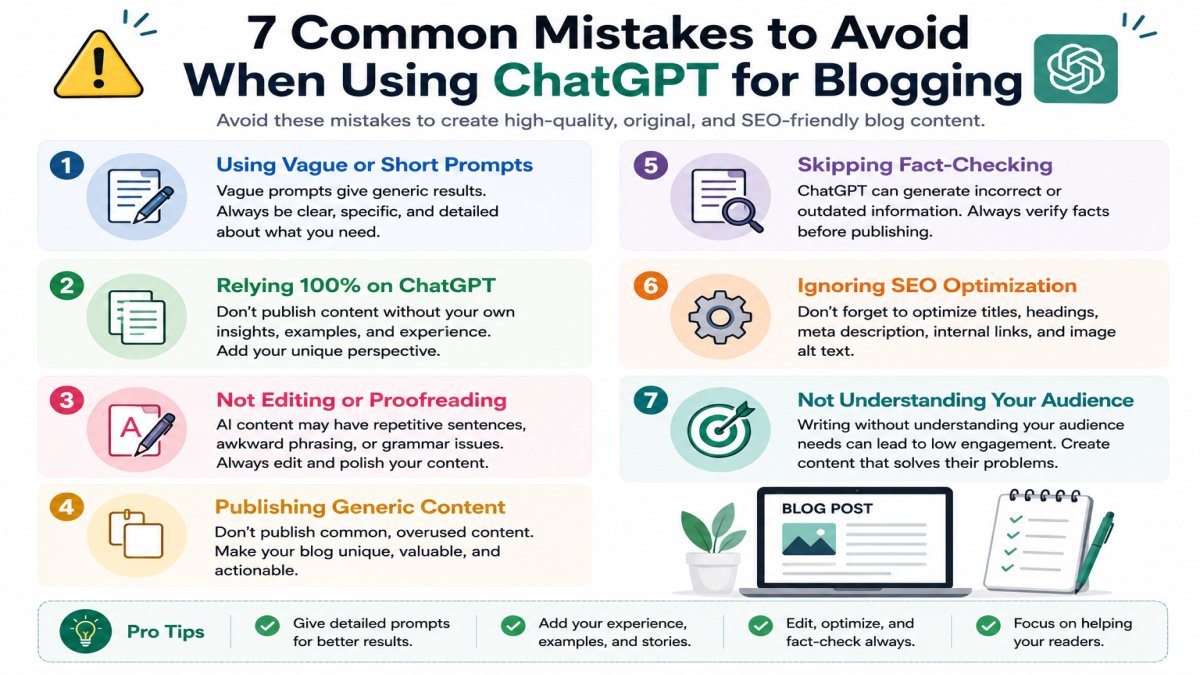
One mistake I see many beginners make is copying and publishing AI-generated content without reviewing it. While ChatGPT is helpful, readers still expect accuracy, examples, and a human perspective.
Avoiding these mistakes can significantly improve your content quality.
Publishing AI Content Without Editing
This is one of the biggest mistakes.
Raw AI-generated content often contains:
- Repetition
- Generic statements
- Weak examples
Always review and improve the content before publishing.
Keyword Stuffing
Some beginners repeatedly use the same keyword.
For example:
“How to Write Blog Posts Using ChatGPT” appearing in every paragraph.
This creates a poor reading experience.
Instead, use keywords naturally.
Ignoring Search Intent
If users want a tutorial, do not provide only definitions.
If users want comparisons, do not provide only general information.
Match the content to the user’s goal.
Using AI to Replace Expertise
AI should assist your writing process, not completely replace your thinking.
The best content combines:
- AI efficiency
- Human knowledge
- Real examples
Writing for Search Engines Only
Always remember that real people will read your content.
Write for humans first.
SEO should support the content, not control it completely.
Real-World Examples
Let’s look at practical examples of how bloggers use ChatGPT.
Example 1: Student Blogger
A student wants to create a blog about study techniques.
They ask ChatGPT:
“Give me 20 blog ideas related to study productivity.”
Within seconds, they receive multiple content ideas and can start planning articles.
Example 2: Content Creator
A content creator needs an outline for a new article.
Prompt:
“Create a detailed outline for a beginner guide to AI image generators.”
ChatGPT provides:
- Introduction
- Main sections
- FAQs
- Conclusion
The creator then expands each section manually.
Example 3: Website Owner
A website owner publishes educational AI content on UseAiLearn.
They use ChatGPT to:
- Generate article ideas
- Create outlines
- Improve readability
- Write draft content
Afterward, they edit the article, add examples, optimize SEO, and publish a polished final version.
Example 4: Beginner Blogger
Someone learning how to write a blog post as a beginner may struggle with structure.
ChatGPT helps by generating:
- Titles
- Outlines
- Introductions
- FAQ sections
This reduces the learning curve and makes blogging less intimidating.
Frequently Asked Questions (FAQs)
1. Can I use ChatGPT to write a blog?
Yes. ChatGPT can help generate ideas, outlines, drafts, and content suggestions. However, it is recommended to review, edit, and improve the content before publishing.
2. How to Write Blog Posts Using Free Version ChatGPT?
You can use the free version of ChatGPT to create outlines, generate article sections, brainstorm ideas, and improve existing content. Many beginners successfully create blog content using the free version.
3. Is ChatGPT good for beginner bloggers?
Yes. ChatGPT is particularly useful for beginners because it helps overcome writer’s block and provides guidance during the content creation process.
4. Will Google rank content written with ChatGPT?
Google focuses on content quality rather than the tool used to create it. Helpful, accurate, and user-focused content can perform well regardless of whether AI assisted in the writing process.
5. Can ChatGPT replace human writers?
No. ChatGPT is best used as a writing assistant. Human creativity, experience, expertise, and judgment remain important for creating high-quality content.
Final Thoughts
Learning How to Write Blog Posts Using ChatGPT is one of the most valuable skills for modern content creators, students, bloggers, and website owners.
ChatGPT can help you generate ideas, create outlines, write drafts, and improve productivity. However, the most successful bloggers use AI as an assistant rather than relying on it completely.
If you want to create content that ranks well, builds trust, and provides real value, combine AI-generated drafts with human editing, practical examples, and original insights.
For beginners, the process is simple:
- Choose a keyword.
- Understand search intent.
- Generate an outline.
- Write content section by section.
- Edit and improve.
- Optimize for SEO.
- Publish consistently.
At UseAiLearn, we believe AI should help people learn faster and work smarter. By following the strategies in this guide, you can confidently start creating high-quality blog content using ChatGPT while building valuable skills for the future.
Conclusion
If you’re just starting your blogging journey, don’t worry about creating perfect articles from day one. Focus on learning, publishing consistently, and improving with every post. ChatGPT can save you time, but your ideas, experiences, and insights are what make your content truly valuable.
The key is to use ChatGPT strategically. Focus on creating helpful content, solving real problems, and providing genuine value to readers. When combined with human expertise and thoughtful editing, ChatGPT can become a powerful blogging partner.
Start with a simple article, practice regularly, and continue improving your content creation skills. Over time, you will become more confident and efficient at creating blog posts that both readers and search engines appreciate.